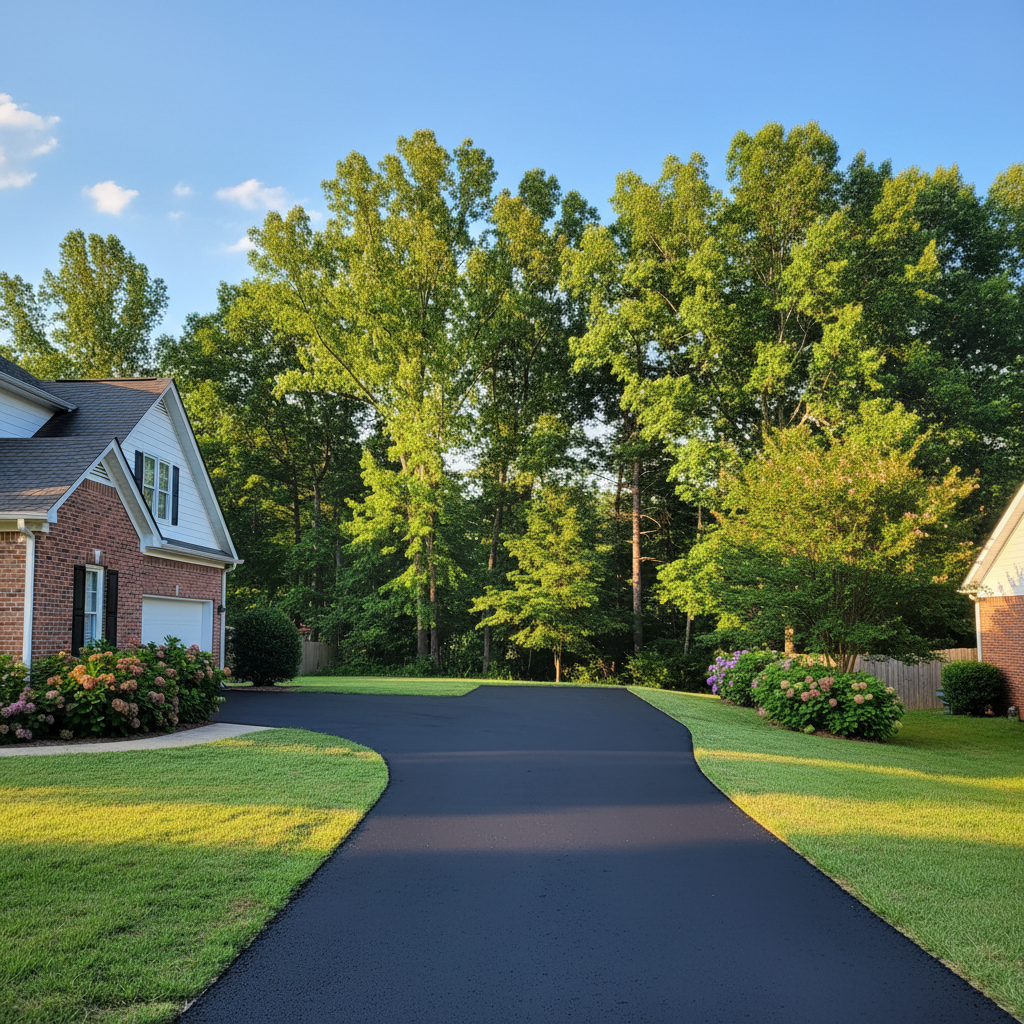
When's the best time to get work done on your asphalt driveway here in Montgomery? That's a question I get asked a lot. Folks often think it's just about calling us up when they spot a crack, but honestly, our local climate means you've got to think a bit more strategically about paving and maintenance if you want your driveway to last.
Understanding Montgomery's Climate & Your Asphalt
Our summers? Brutal, plain and simple. The intense heat and humidity we get from May through September aren't just uncomfortable for us; they're incredibly tough on asphalt. That constant expansion and contraction, plus all the UV exposure, breaks down the binder in the asphalt. This leads to cracking and fading. Then, of course, you've got the heavy rains, sometimes even tropical storm remnants, which can wash away base materials if your drainage isn't quite right.
Winters here are usually mild, but we definitely get those cold snaps. Sometimes we even see a freeze-thaw cycle or two, especially in places like the northern parts of Montgomery County where it can get a little colder. That's when water gets into those tiny cracks, freezes, expands, and turns a small problem into a big pothole overnight. You've seen it happen, right?
Best Times for Paving & Major Repairs
For new paving or significant repairs, like an overlay or a full replacement, you really want to aim for the spring or fall. I'm talking late March through May, and then again from late September through early November. Why those times?
- Temperatures are just right: Asphalt needs certain temperatures to cure properly. It's got to be warm enough for the asphalt to be pliable and for the layers to bond well, but not so hot that it cures too fast or the crew is battling heat stroke. We're generally looking for consistent temperatures above 50°F and below 90°F.
- Less rain: While we can always get a pop-up shower, these seasons tend to have more predictable weather patterns than our summer thunderstorm season or winter's occasional cold, wet fronts. You simply can't pave on a wet surface, and heavy rain right after paving can cause issues with compaction and curing.
- Better working conditions: For my crew at Quantum Asphalt Solutions, working in 70-degree weather is a lot safer and more efficient than trying to lay hot asphalt when it's 100 degrees with 90% humidity.
If you're thinking about a big project, get on our schedule early for these prime windows. They fill up fast, believe me.
Sealcoating: Your Driveway's Sunscreen & Raincoat
Sealcoating is your best friend when it comes to year-round protection. Think of it as a protective layer that shields your asphalt from UV rays, water penetration, and even minor oil spills. It also brings back that nice, dark black color, making your driveway look brand new.
The best time for sealcoating is similar to paving: spring and fall. The same temperature rules apply – it needs to be warm enough for the sealer to cure correctly, usually above 50°F for at least 24-48 hours after application. You also need a few days of dry weather. Trying to sealcoat in the middle of summer means the sealer might dry too quickly, leading to cracking, or if it's too cool, it won't cure properly and just won't last. We generally recommend sealcoating every 2-3 years, depending on traffic and how much sun your driveway gets.
Year-Round Maintenance Tips for Montgomery Homeowners
Even when we're not actively working on your driveway, there are things you can do to protect your investment:
- Patch cracks early: Don't wait for a small crack to turn into a pothole. Especially before winter, fill those cracks. It stops water from getting underneath and causing bigger problems with freeze-thaw cycles.
- Keep it clean: Sweep off dirt, leaves, and debris regularly. This prevents organic matter from breaking down on the surface and staining, and it also helps water drain properly.
- Watch for oil & gas spills: These chemicals break down asphalt. Clean them up immediately with an absorbent material and a stiff brush. Don't let them sit there.
- Ensure proper drainage: Make sure water isn't pooling on your driveway. If it is, you might have a sub-base issue or a drainage problem that needs addressing. Standing water is asphalt's enemy, no doubt about it.
- Trim back trees and shrubs: Roots can undermine your asphalt, and overhanging branches can drop sap or debris that's tough to clean.
Taking a proactive approach to your asphalt driveway means it'll last longer, look better, and save you money in the long run. If you've got questions about your specific driveway or need an assessment, don't hesitate to give us a call at Quantum Asphalt Solutions. We're here to help Montgomery homeowners keep their property looking sharp.